


Dr. Foster’s Path to LSU and Sugar Cane
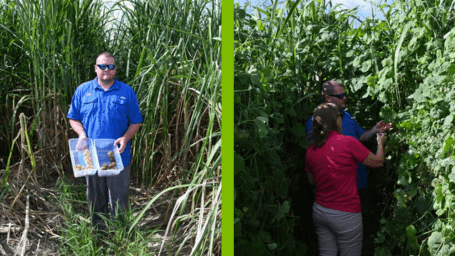
When Dr. Matt Foster steps into a sugar cane field, he’s not just checking rows of cane, he is on the lookout for anything that might threaten the crop that defines South Louisiana.
Foster grew up in Vidalia, Louisiana. His first job in agriculture was working for a local farmer and crop consultant. That hands-on start eventually led him to the Louisiana State University (LSU) Cooperative Extension Service, where he found his passion for research. By 2018, he had earned his Ph.D. in weed science from LSU and stepped into his current role as the state’s sugar cane weed scientist with the LSU AgCenter.
Although he didn’t grow up around cane, his background was in cotton, corn, and soybeans; sugar cane quickly became his focus. “Sugar is the lifeblood of Louisiana, in my opinion,” Foster says. “It is a very unique crop, and I really enjoy working with the sugar cane farmers in the state. They are a very good group of people to work with.”
A New Threat Discovered in Louisiana Cane Fields
That relationship with farmers has been central to his work. By spending time in their fields and listening to what they are seeing, Foster has been able to identify new threats, including one that had never been documented in Louisiana until he made the discovery.
On a farm in St. John the Baptist Parish, Foster noticed an unfamiliar vine choking cane and causing stalks to collapse. After careful study and sending samples to a laboratory in Germany for confirmation, he identified the culprit: Luffa quinquefida.
“It’s a first documentation for Louisiana,” Foster explains. “This vine has a very aggressive growth habit. It can overtake cane, cause problems during harvest, and it spreads quickly.”
Identifying and Managing Luffa quinquefida
After presenting his findings at recent sugar cane Field Days and handing out samples of the new weed for farmers to see up close, Foster was invited to visit more farms. These stops led to new sightings of the vine, confirming that it is spreading through parts of the cane belt.
Distinct from the more familiar morning glory, Luffa quinquefida has bright yellow flowers, deeply lobed leaves, and spiny fruits that reveal a fibrous luffa-like structure inside. Foster’s ongoing trials show that the weed can be managed with existing herbicide programs but only if farmers act early.
“You need to be timely in your management of this vine, as it can be more aggressive than the traditional species we deal with,” he says.
Protecting Louisiana’s Sugar Cane Legacy
For Foster, every new challenge in the field is a reminder of what’s at stake. Research helps ensure that sugar cane remains central to Louisiana’s heritage and economy. “Sugar is the foundation of our communities in Louisiana,” he says. “It provides jobs, infrastructure. It’s essentially a way of life.”
Originally published by American Sugar Cane League.


Get Social with #MoreToSugar