
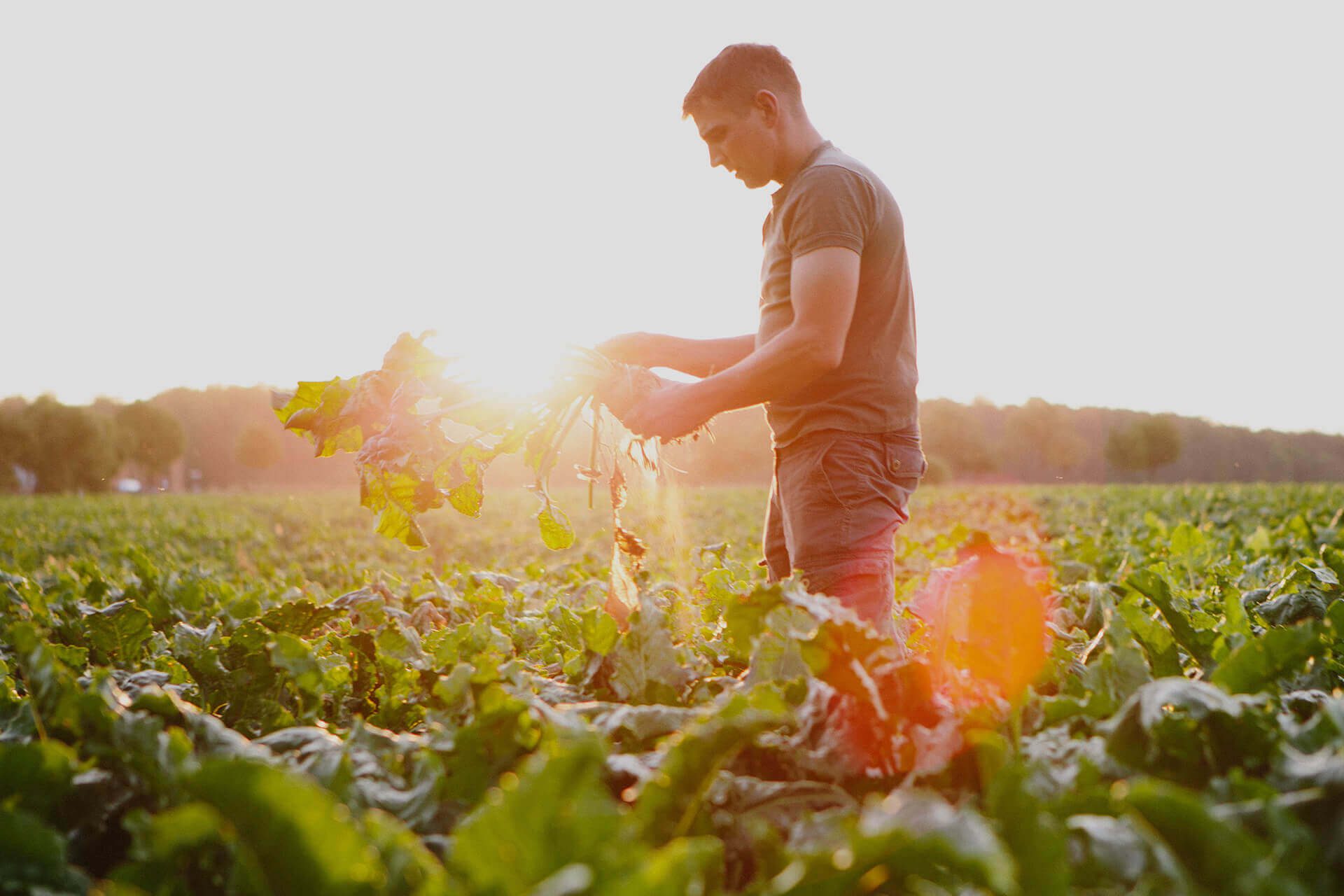
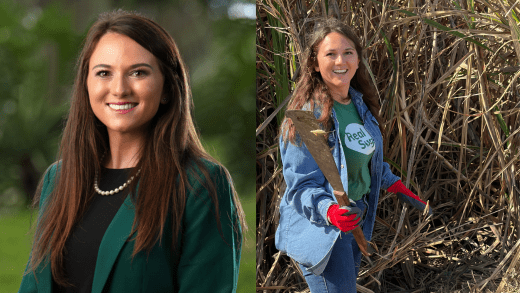
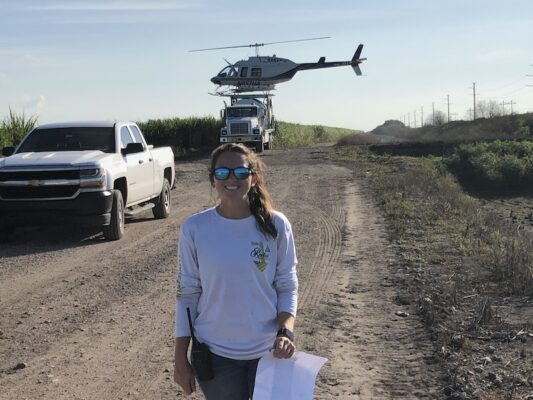
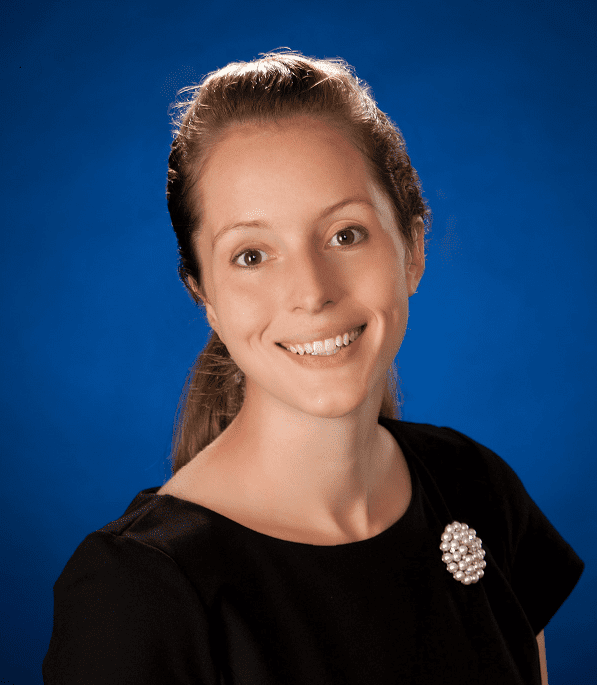
Gracelyn Byrd Mungillo grew up hunting and fishing with her father in the Central Savannah River Area of South Carolina and knew early on a desk job was never in her future. Today, as a research agronomist for U.S. Sugar, she spends her days outdoors finding research-based solutions for Florida sugarcane farmers. Mungillo’s workdays can include a helicopter ride during a field trial, and even a spider bite to the nose, and she wouldn’t have it any other way.
How a South Carolina Outdoorswoman Found Her Calling in Florida Sugar Cane Research
 Mungillo’s path to becoming an agronomist began in high school, where many of her classmates chose to pursue careers in nursing and education.
“I didn’t know exactly what I wanted to do, but I knew those careers weren’t the right fit for me,” she said. “I wanted to combine my love of working outdoors with my passion for conservation and the environment.”
A family member and trained wildlife biologist recognized Mungillo’s interest in natural resources and arranged for her to tour the Natural Resource Management program at Abraham Baldwin Agricultural College (ABAC) in Tifton, Georgia.
“I fell in love with the school and enrolled as a Natural Resource Management major,” Mungillo said. “Moving to Tifton placed me in the heart of true farm country for the first time. I was surrounded by cotton, peanuts, corn, sod, and watermelons, and I was captivated. Being immersed in agriculture was exciting, and I was drawn to it.”
After a year and a half in Natural Resources Management, Mungillo switched majors with encouragement from former Secretary of Agriculture Sonny Perdue, who she met through a professional opportunity and served as her mentor at the time.
“I made the decision to major in Agriculture with a concentration in Agricultural Business Management,” she said. “At its core, agriculture depends on conservation and stewardship. If we don’t use the natural resources God has entrusted to us wisely, we won’t be farming for long.”
In the summer of 2016, Mungillo interned at Walther Farms, one of the largest suppliers of chipping potatoes for Frito-Lay in the United States.
“ABAC required all agriculture students to complete a summer internship,” she said. “I did not grow up in agriculture and really wanted hands-on experience, so I was very intentional about finding an internship on a working farm.”
During her internship, Mungillo conducted quality control tests at Walther Farms’ operations in Georgia, South Carolina and Indiana.
“I was fascinated to the see the real-life effects of things like nematodes, sun damage, disease, and nutrient deficiencies on the quality of the potatoes that would be sliced, fried, and in a bag on their way to a grocery store within 48 hours,” Mungillo said. “It opened up this whole exciting reality about how agronomic decisions in the field have real, tangible effects on the food products my family and friends were eating.”
During her internship, Mungillo was deeply influenced by agronomist Luke Johnson and her future goals took shape.
“Luke’s depth of knowledge and problem-solving ability inspired me and the difference he made for the operation made my career path clear,” she said. “I returned to ABAC with a new mission: to do whatever it took to become the kind of agronomist who could make real difference for growers.”
After graduating in 2017 with a Bachelor of Science degree in Agriculture with a concentration in Agribusiness Management, Mungillo joined Ag Technologies, LLC, a Trimble precision agriculture dealership serving Georgia, South Carolina, and Florida.
“I relocated to Florida and worked with growers across a wide range of crops, including sugarcane. My role was to help them implement precision agriculture technologies tailored to their operations,” she said. “I became a Certified Crop Advisor in 2018, which is considered the benchmark of professionalism for agronomists in North America.”
Through Ag Technologies, Mungillo worked closely with U.S. Sugar, a vertically integrated farming company in Clewiston, Fla., which produces sugarcane, sweet corn, and winter vegetables. Her role included maintaining and supporting precision agriculture systems for the company, which is America’s largest producer of sugarcane and employs 3,000 people in Florida
and Georgia. U.S. Sugar is part of the larger Florida sugarcane industry which supports more than 19,000 jobs and contributes $4.7 billion to the state’s economy annually.
Inside U.S. Sugar’s Research Department: Solving Real Problems for Florida Sugar Cane Growers
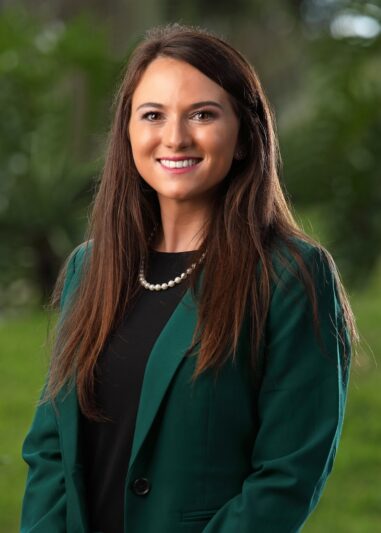 Mungillo joined U.S. Sugar’s research department in 2019 and conducted small-plot fertilizer trials for the company and its growers.
“The team of researchers here including Dr. Chris Laborde, Dr. Rosa Muchovej, and Everton Barreto have been great mentors to me and taught me so much,” she said. “Much of my research has focused on evaluating controlled-release fertilizer coatings to improve nitrogen delivery to sugarcane grown on sandy soils, and I have also led several studies evaluating silica amendments. While silicon is not an essential nutrient, it can be highly beneficial in crops like sugarcane and rice, particularly in fields with low available silicon, where applications can increase yields.”
Mungillo earned her Master of Science in Agronomy, with a concentration in Agroecology, from the University of Florida in 2022. With the company’s Chief Soil Scientist approaching retirement, U.S. Sugar asked Mungillo if she would pursue a Ph.D. to prepare for the role, which requires doctoral training. She began her Ph.D. program at University of Florida in 2023 and expects to graduate in 2027.
Most of Mungillo’s work at U.S. Sugar begins with reading current research, identifying knowledge gaps, and designing experiments to test specific hypotheses.
“From there, my days often shift into planning and field work. This can include include coordinating aerial imagery collection with drones, collecting soil and leaf tissue samples, or measuring sugarcane yield and quality,” she said. “All of that requires careful preparation of equipment, materials, human resources, and sampling plans before we ever step into the field.”
The most demanding part of her job is exploring and analyzing data after it is collected, according to Mungillo.
“Real-world agricultural data can be difficult to understand and analyze because of field variability, unpredictable weather, and the great complexity of biological systems,” she said. “However, when the analysis finally comes together and the results are translated into something useful to communicate to farm managers and growers so they can make more informed, data-driven crop management decisions, it’s incredibly rewarding.”
Protecting the Everglades While Feeding the Nation
While the rewards are great, so are the challenges posed by Florida’s environmental regulations, the sugarcane crop and the weather.
“Our proximity to the Everglades adds an important layer of responsibility. We operate under some of the strictest nutrient and water-use regulations in the country, and are proud to adhere to them,” Mungillo said. “We protect the surrounding ecosystem and know good stewardship is what will keep us farming on this land for the next 100 years.”
Trying new research methods almost always involves trial and error for agronomists everywhere, according to Mungillo.
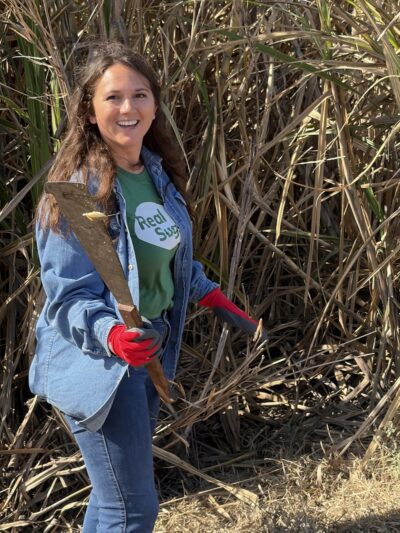 “When you’re working in real production systems, things don’t always go as planned, and sometimes you don’t realize something didn’t work until it’s too late to change it,” she said. “That challenge is amplified in sugarcane because it’s a long, perennial crop. If an approach fails, you often have to live with those results until the next growing season before you can adjust and try again on a different field. It forces you to be patient, thoughtful, and thorough in your planning.”
Sometimes even the most thorough planning can be disrupted, especially in Mungillo’s area south of Lake Okeechobee, where hurricanes, excessive rainfall, prolonged drought periods, and freezing temperatures can all significantly impact crop growth and management decisions in one crop season.
“We recently experienced three nights of freezing temperatures that severely impacted our crops and still don’t know the full extent of the damage yet. It’s difficult, especially when this was expected to be a record crop year,” she said. “I’m still waiting to find out if this freeze event has damaged my Ph.D. research. However, I’ve been given peace in knowing that, even if it has, God has a plan to carry us through. We don’t always understand why God allows things like this to happen, but we are called to trust that He is good and that He has a purpose, even when we can’t see it. Our responsibility is to do the very best we can with what we’ve been given, and to trust Him with the outcome.”
At the end of the day, both Mungillo’s deep faith and growers’ faith in her is what keeps her going.
“When growers or farm managers call with a problem they’re seeing in the field and trust me to help them work through it, being able to help identify an answer is what makes my job meaningful to me,” she said.
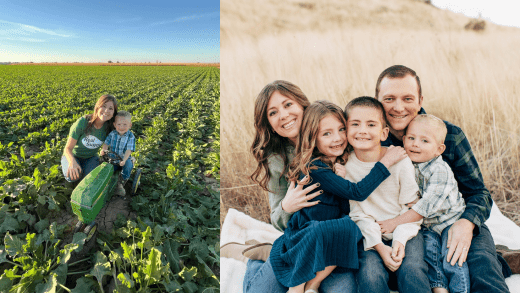
When Mungillo is not work, she enjoys spending time with her husband Logan, a Lieutenant with the LaBelle Fire Department. She is an avid runner who recently completed her first half marathon, and is passionate about wildlife photography, hiking, traveling, cooking, and serving in her church women’s and children’s ministries.

Get Social with #MoreToSugar